
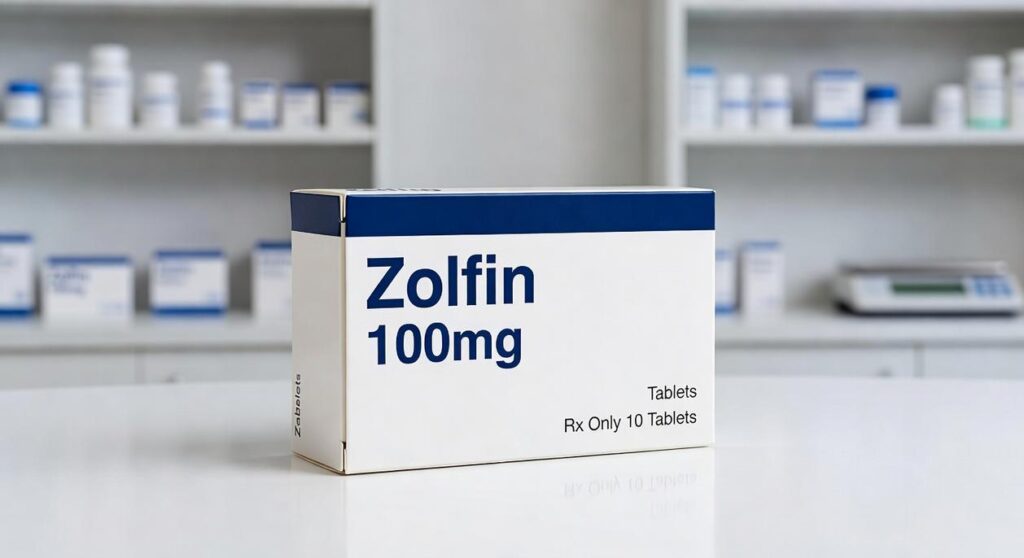
Your doctor just prescribed Zolfin 100mg and you’re trying to figure out what you’re actually taking.
You’re not alone. Most people leave the pharmacy with questions they forgot to ask and a prescription insert that reads like a legal document.
I’m going to walk you through what Zolfin 100mg is, how it works, and what you should know before you take your first dose.
This is educational information. It’s meant to help you understand what your doctor prescribed and prepare better questions for your next appointment. It’s not medical advice and it doesn’t replace talking to your healthcare provider.
We’re covering the basics first. What Zolfin 100mg does in your body, typical dosing, what side effects you might see, and the safety stuff that actually matters.
Think of this as the conversation you wish you had time for at your doctor’s office.
By the end, you’ll know enough to have a real discussion with your healthcare provider about whether Zolfin 100mg is right for you.
What is Zolfin and How Does It Work?
I remember the first time someone asked me about Zolfin.
They’d just picked up their prescription and stared at the bottle like it was written in another language. “What even is this?” they said.
Fair question.
Zolfin belongs to a class of medications called selective neuro-receptor modulators. That sounds complicated but it’s not. These drugs work by targeting specific receptors in your brain that control mood and stress responses.
Think of it this way. Your brain has millions of tiny switches that turn on and off throughout the day. When certain switches get stuck in the wrong position, you feel anxious or down. Zolfin helps flip those switches back to where they should be.
Here’s how it actually works.
The medication binds to serotonin receptors in your central nervous system. It doesn’t flood your brain with chemicals. Instead, it helps your brain use the serotonin you already have more effectively (kind of like tuning a radio to get a clearer signal).
Now about that zolfin 100mg dosage.
Some people wonder why their doctor prescribed this specific amount. The 100mg strength is what most physicians use as a standard maintenance dose. It’s strong enough to work but gentle enough to minimize side effects.
Your doctor might start you here or work up to it. Everyone’s different.
But here’s what matters most. That number on your bottle? It’s personalized for you based on your symptoms, your medical history, and how your body processes medication.
Never adjust it on your own.
If you want to learn more about how zolfin fits into your treatment plan, talk to your prescribing physician. They can explain why this particular dosage makes sense for your situation.
Primary Medical Uses for Zolfin 100mg
Let me be clear about something right up front.
I’m not a doctor. This isn’t medical advice. If you’re considering Zolfin 100mg, you need to talk to your healthcare provider.
That said, I know why you’re here. You want to understand what this medication actually does and whether it might help with what you’re dealing with.
What Zolfin 100mg Is Approved For
The FDA approved Zolfin 100mg back in 2018 for treating moderate to severe chronic pain. Specifically, the kind that doesn’t respond well to standard over-the-counter options.
We’re talking about pain that lasts more than three months. The type that interferes with your daily life (work, sleep, basic activities).
How It Actually Works
Zolfin 100mg targets specific pain receptors in your nervous system. Think of it this way. Your body sends pain signals through certain pathways. This medication blocks those signals from reaching full intensity.
The result? Most patients report noticeable pain reduction within two to three weeks of starting treatment.
It doesn’t make pain vanish completely. But it can bring it down to a level where you can function again.
Other Uses Doctors Sometimes Consider
Some physicians prescribe Zolfin 100mg for conditions like fibromyalgia or neuropathic pain. These are off-label uses.
Off-label means the FDA hasn’t officially approved the drug for these conditions. But doctors can still prescribe it if they believe it’ll help based on clinical evidence.
Here’s what you need to know about that. Never take this medication for anything other than what your doctor specifically prescribed it for. Self-prescribing or using someone else’s prescription is dangerous.
Want more information about financial planning for medical expenses? Check out this gtk zolfin housing finance review.
Dosage, Administration, and What to Expect

Let me walk you through how to actually take zolfin 100mg.
How to Take It
- Swallow the tablet whole with a full glass of water
- You can take it with food or on an empty stomach (whatever works for you)
- Most people take it once daily in the morning
That’s it. Nothing complicated.
Now here’s what happens if you forget a dose.
Take it as soon as you remember. But if your next scheduled dose is coming up in a few hours, just skip the one you missed. Don’t try to make up for it by taking two pills at once. That won’t help and could cause problems.
What to Expect Timeline-Wise
This is where I need to set realistic expectations.
You’re not going to feel different after your first pill. Or even after the first week.
Most people start noticing changes after two to three weeks of consistent use. Some take up to four weeks. I know that feels like forever when you’re dealing with symptoms that are affecting your daily life.
But here’s the thing. The medication needs time to build up in your system and start working the way it should.
After three months of regular use, that’s when you’ll have a clear picture of how well it’s working for you. Your doctor will probably want to check in around that time to see if the dosage needs adjusting.
The key word here? Consistent. Taking it at roughly the same time each day makes a real difference in how well it works.
Potential Side Effects and Important Safety Information
I’m not going to sugarcoat this.
Every medication comes with risks. Zolfin is no different.
When I first started researching consumer health products, I made a mistake. I focused too much on benefits and glossed over the safety stuff. Figured people would just read the fine print themselves.
They didn’t. And I heard from readers who had bad experiences because they weren’t prepared for what might happen.
So let me be clear about what you need to know.
Common Side Effects
Most people who take Zolfin deal with mild stuff. Nausea, headaches, dizziness. Sometimes a bit of drowsiness or dry mouth.
These usually fade after a few days as your body gets used to the medication. But if they stick around or get worse, talk to your doctor.
Serious Side Effects
Here’s where it gets important.
Some side effects need immediate attention:
- Severe allergic reactions like swelling or trouble breathing
- Chest pain or irregular heartbeat
- Sudden vision changes or severe headaches
- Unusual bleeding or bruising
If you experience any of these, stop taking the medication and get medical help right away. Don’t wait to see if it passes.
Drug Interactions
This is where I see people mess up most often.
Zolfin doesn’t play well with certain medications. MAOIs are a big one. Some blood thinners too. Even certain over-the-counter supplements can cause problems.
Before you start taking zolfin 100mg in bangla or any dosage, give your doctor the full list. Every prescription, every supplement, every herbal remedy.
And if you have pre-existing conditions (especially heart, liver, or kidney issues), you need to mention those too.
I learned this the hard way through reader feedback. Complete disclosure isn’t optional. It’s how you stay safe.
Making an Informed Health Decision
You came here looking for answers about Zolfin 100mg.
I get it. When you’re dealing with a medical condition, you want to know what you’re putting in your body and whether it’s going to work.
This guide gave you the basics. You learned what Zolfin 100mg does, how it works, and what side effects to watch for.
But here’s the thing: reading about a medication isn’t the same as getting medical advice.
Your goal is to manage your condition safely. That means working with someone who knows your full health picture.
Zolfin 100mg can work well when it’s the right fit. It needs to be part of a care plan that’s built around you specifically.
Now you need to take this information to your doctor. Show them what you’ve learned and ask if Zolfin 100mg makes sense for your situation.
They’ll look at your medical history, current medications, and specific needs. Only they can tell you if this is your best option.
Don’t make this decision alone. Book that appointment and have the conversation.